Skip to content

Years 1 to 6

Great Discoveries

In Great Discoveries, from Year 1 to Year 6, we accompany children following home education within a setting of community, relationships and shared learning.

We start from the curriculum and essential learning outcomes, while organising learning in a more flexible, personal and meaningful way. In Year 1, a trusted adult is more consistently present; from Year 2, the journey gradually involves small-group tutorials with different adults responsible for the various learning areas.

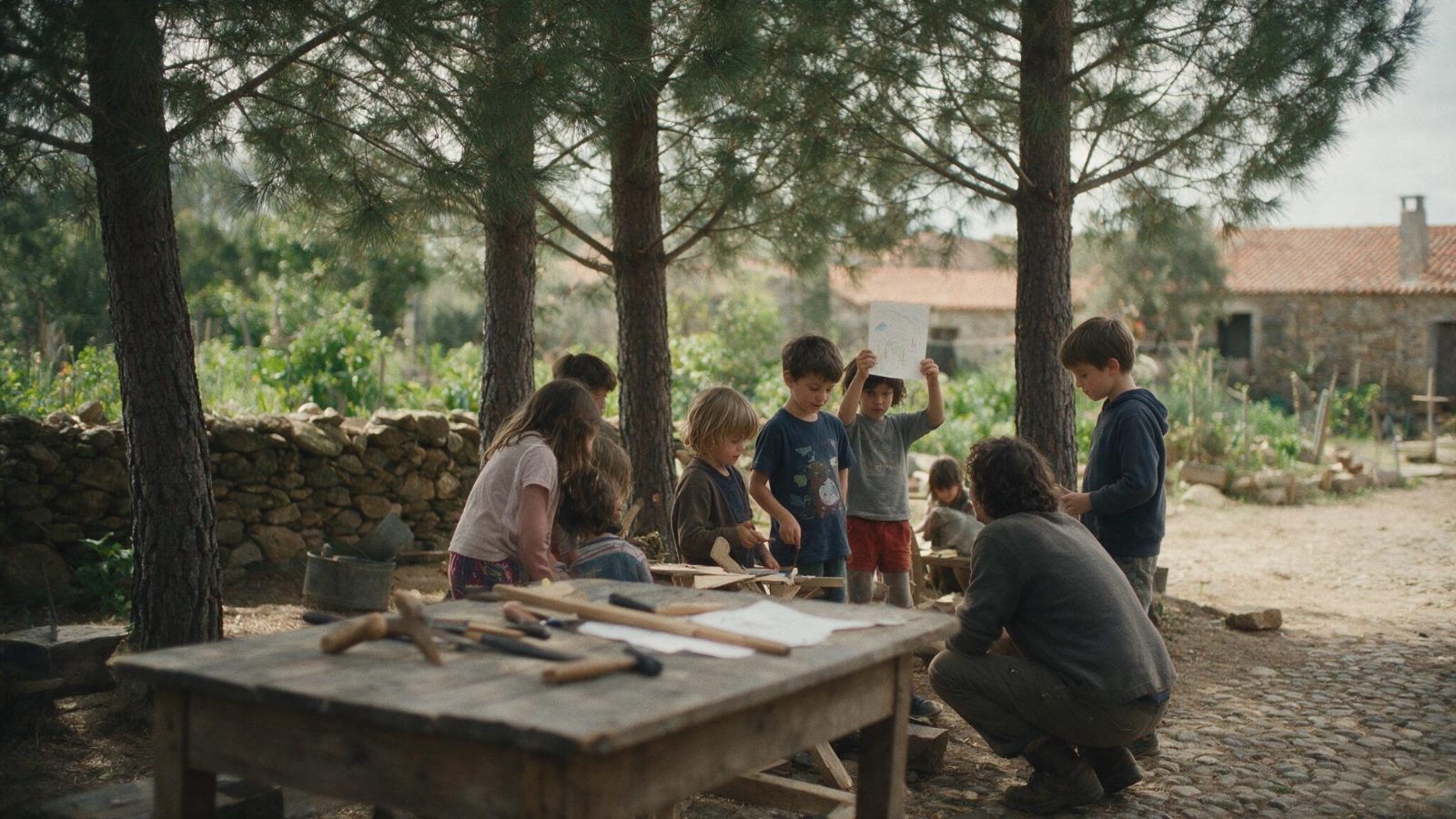
Learning also happens through projects, investigation, workshops, practical experiences, nature and community life, making space to think, experiment, make mistakes, question, revisit and discover.

We want children to build solid foundations while gradually learning to understand themselves as learners, take responsibility, work with others and become more independent in their learning.

Learning journeys

Year 1

Year 1 is an important transition. Learning gains structure and intention without breaking with what children already know: play, movement, relationships, nature and discovery remain part of everyday life.

A trusted adult accompanies the group closely and coordinates the different areas, in an arrangement similar to a single class teacher.

This year is especially dedicated to building fundamental tools for schooling: reading, writing, communicating, mathematical reasoning, organising work and beginning to take responsibility for learning.

Literacy is central, not simply as a technical skill, but as a new way to gain autonomy, understand the world, communicate and access new discoveries.

We want entry into Year 1 to be a continuation rather than a break, bringing new demands and challenges while respecting children's rhythms, needs and ways of learning.

Who accompanies Year 1

The group is closely accompanied by a trusted adult who coordinates the different areas of learning.

Throughout the week, children also meet other tutors, professionals, workshops and experiences within the community.

At SER, we believe learning needs security, relationships and challenge together. At this stage, understanding how a child experiences the process is as important as following what they learn.

Meet the team
Years 2 to 6

A time to deepen understanding, question and gain autonomy

From Year 2, learning becomes progressively more specialised and children work with different tutors responsible for various areas of knowledge.

Tutorials take place in small groups of up to 10 children, allowing each tutor to know every child's journey, follow difficulties, adjust challenges and provide opportunities to go deeper.

A tutorial is more than a lesson in a smaller group. It may involve explanation, conversation, investigation, problem-solving, individual work, peer collaboration or projects.

There is planning and clear objectives, alongside room for what happens in the moment: a question may open a new path, a difficulty may need more time, and an interest may become a starting point for deeper learning.

Children do not all need to do exactly the same thing, in the same way or at the same time. We aim to help each child progress from where they are, with support when needed and new challenges when ready to go further.

As they grow, children are asked to take an increasingly active role: organising materials and tasks, managing time, developing study strategies, making decisions and recognising when they need help.

Tutors coordinate regularly, because each child and their learning journey form a whole.

Who accompanies Great Discoveries

Children learn with different tutors who bring knowledge, experience and different perspectives to each area.

Having several adults does not mean fragmented support. The team shares observations, follows each child's journey and maintains a broad view of their development and learning.

At SER, tutors do more than deliver content. They explain, guide, question, challenge, support and create conditions for children to need adults less and less to know how to continue learning.

Meet the team

How we experience this stage

Learning to learn

Autonomy does not appear overnight. Children learn to organise materials, manage time, ask for help, recognise difficulties, try different strategies and reflect on their work. Gradually, we want each child to understand not just what they are learning, but how they learn best.

Small-group tutorials

Tutorials allow close, responsive support. In groups of up to 10 children, there is room to explain, question, practise, investigate, collaborate and go deeper. Tutors know each child's journey and adapt support and challenge to their needs.

Projects and investigation

Learning often gains meaning when connected to real questions, interests, problems or challenges. Projects cross different areas of knowledge and involve investigating, testing ideas, building, revising and presenting discoveries.

Different rhythms, different paths

We do not expect all children to be at exactly the same point or learn in the same way. One may need more time and support; another may be ready to go deeper or move forward. The aim is not to keep everyone in step, but to ensure everyone keeps progressing.

Critical thinking and problem-solving

More than memorising answers, we want children to learn to ask questions, find information, compare perspectives, reason, test hypotheses and find different ways to solve a problem.

Whole-child development

Learning is not only academic. Emotional, social and relationship skills are part of daily life: recognising emotions, handling frustration, communicating needs, working with others, taking responsibility and participating in community life are essential learning too.

What defines Great Discoveries

Small groups

Tutorials take place in small groups of no more than 10 children. This allows us to know each journey better, follow difficulties closely and adjust the challenge while preserving the group experience.

Individual support

Learning is followed continuously through daily observation, coordination between tutors, work records, portfolios, six-monthly reports and family meetings.

We seek to understand not only what children know, but how they learn, where they struggle, what motivates them and what their next step could be.

Learning in community

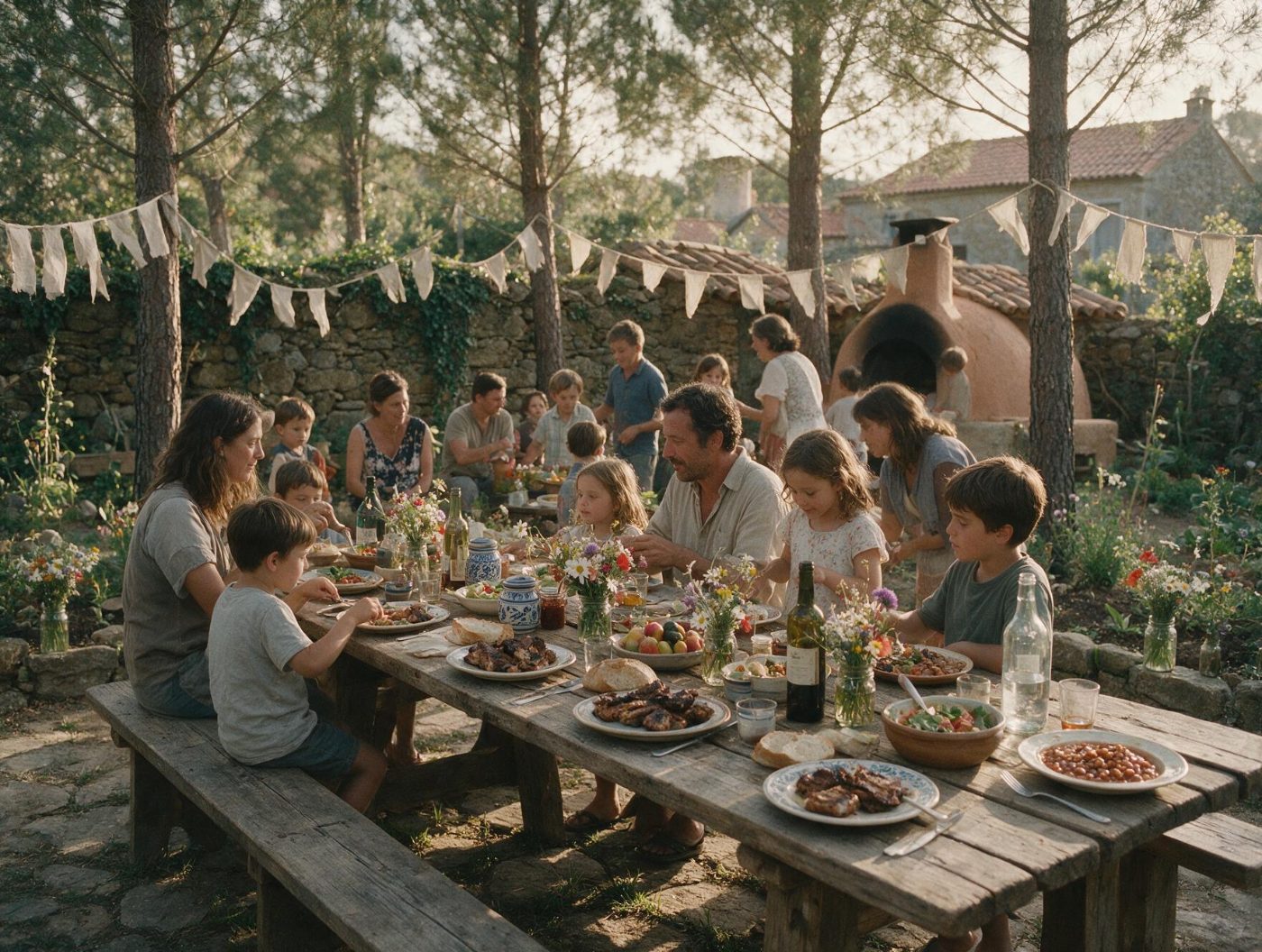
Learning at SER does not happen only between a child and a tutor. It also happens through peer relationships, shared projects, assemblies, workshops, contact with different adults and participation in community life.

As children grow, they gradually take on responsibilities and learn that belonging to a community means participating, caring, collaborating and contributing.

Supported home education

Great Discoveries operates within the home education framework, while learning takes place daily at SER, in groups, with tutors, projects, workshops and community life.

SER provides the educational setting, team, tutorials, projects and everyday pedagogical support, and helps families understand and organise the procedures associated with this framework.

Formal responsibilities remain with the family, the school of enrolment and the parties defined by law, while the learning journey is lived daily within a community.

Still have questions?

Is home education legal?

Yes. Home education is a legal form of schooling in Portugal, subject to its own rules for enrolment, monitoring, assessment and certification.

Do parents have to teach at home?

No. Years 1 to 6 operate within the home education framework, but learning takes place daily at SER with tutors, projects, workshops and group work. Families retain the formal responsibilities associated with this framework.

Do you follow the national curriculum?

In Years 1 to 4, work is guided by the essential learning outcomes for each year. In Years 5 and 6, the core areas that sustain academic progression are covered and linked with projects, children's interests and a more integrated approach to learning.

How do tutorials work?

Tutorials take place in small groups with adults responsible for learning areas such as Portuguese, Mathematics, Science, History and Geography, English, Citizenship and the Arts. They may include explanation, investigation, problem-solving, individual work, peer collaboration or projects.

Do all children do the same work?

Not necessarily. There is shared organisation and learning objectives, but the level of challenge, support and strategies can be adapted to each child's journey and pace.

How do you follow learning progress?

Support is continuous. The team observes daily work, records progress and difficulties, meets together and documents each journey through portfolios, reports and other learning records.

How do you communicate with families?

Families regularly follow the work through the school management platform and receive six-monthly reports. There are also progress meetings and close communication with the team whenever needed.

Are there grades?

In everyday life at SER, we prioritise feedback, reflection and formative assessment. Rather than grading every task, we seek to understand what children have mastered, where they struggle and what their next challenge should be.

Do children take exams or tests?

Children take the assessments legally required for home education through their school of enrolment. The applicable tests depend on the year and educational cycle.

What is a portfolio?

It is an organised collection of work, records and other evidence documenting a child's learning journey. Alongside its educational purpose, it plays an important role in the formal monitoring of home education.

Can children later return to mainstream school?

Yes. A child in home education can later join a mainstream school, following the applicable enrolment procedures.

What about socialisation?

At SER, children belong to a community every day. They learn and work with other children and adults, take part in projects, workshops and assemblies, resolve conflicts, collaborate and take responsibility. Relationships are part of education itself.

What happens if a child struggles in a subject?

The team aims to identify difficulties early and adjust strategies, support and working time. Likewise, when a child has mastered something, they can be challenged to explore it more deeply or move forward.

Come and get to know SER.

Discover the space, the team and community life. We are here to talk about your family's journey.

Privacy preferences

This site works without optional services. Google Maps, the Tally form and Vercel performance measurement only load with your permission.

You can change or withdraw permission at any time using the footer. Closing this panel does not change your choice.

Privacy policy · Cookie policy